
Agile Software Development has transformed the way software projects are built and managed across the USA. From innovative startups in Silicon Valley to enterprise-level corporations, teams adopt Agile for its speed, flexibility, and customer-driven results.
Unlike rigid models, Agile focuses on iterative development and incremental delivery, allowing software to grow step by step with constant feedback. This approach ensures customer collaboration remains at the center, reducing risks and aligning products with real needs.
Guided by the Agile Manifesto and its core values, the methodology promotes teamwork, adaptability, and rapid improvement, making it the preferred choice for modern software engineering practices worldwide.
What is Agile Software Development?
Agile Software Development is a way of building software that focuses on flexibility in software development, customer collaboration, and delivering value quickly. Unlike the old Waterfall model, Agile is based on iterative development and incremental delivery. Teams build software in short phases called Agile iteration or time-boxed iterations, which help them test, review, and improve regularly.
The Agile philosophy came from the Agile Manifesto in 2001. It introduced Agile values and principles that encourage self-organizing teams, cross-functional teams, and responding to change. This mindset allows developers to produce working software delivery that adapts to customer needs instead of following fixed plans.
Why is Agile Used in Software Engineering?
When we ask, why use Agile in software engineering, the answer is clear. Agile makes it easier for companies to adapt to change and deliver results faster. In the USA, where technology markets shift quickly, companies cannot afford long waiting times. Agile makes it possible to release updates every few weeks instead of waiting months or years.
Agile also improves customer collaboration. Clients are part of the process, giving feedback during the Agile sprint cycle. This ensures that products meet user needs. The combination of Agile project management and Agile mindset creates strong communication between teams and customers, leading to higher satisfaction. To see how this approach works with modern solutions, check out our AI Development Services that also embrace flexibility and continuous improvement.

The Agile Software Development Process
The Agile software development process explained is different from traditional development. Instead of building everything at once, teams use incremental development. Features are added step by step, and each cycle brings a new working version of the software. This approach makes testing easier and reduces errors.
Here is a table showing the difference between Agile vs Waterfall model:
| Feature | Agile Software Development | Waterfall Model |
| Process | Iterative development | Linear development |
| Delivery | Incremental delivery | Final delivery only |
| Flexibility | Responding to change | Rigid and fixed |
| Customer Role | Customer collaboration | Customer feedback at end |
This process ensures continuous improvement and helps teams adapt as new requirements appear.
The Agile Development Life Cycle
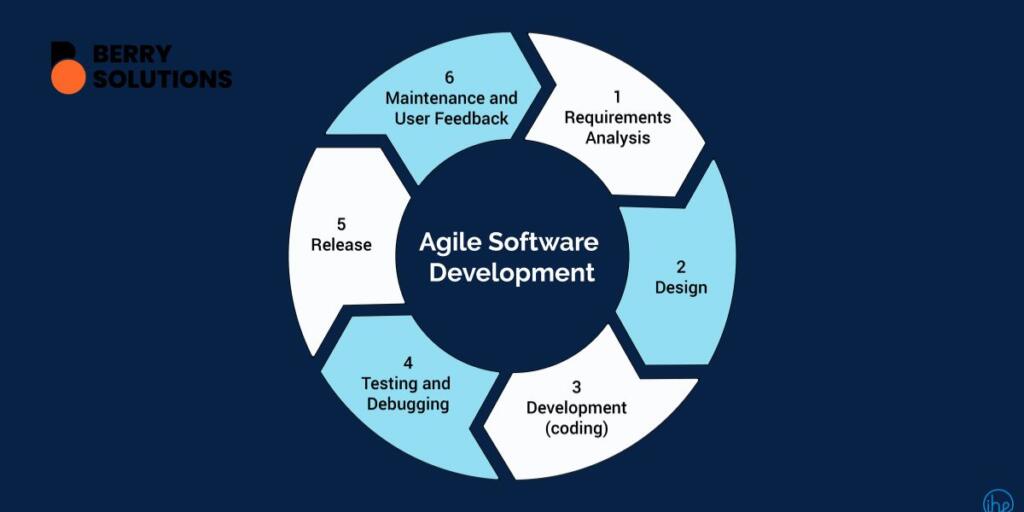
The steps of Agile software development life cycle include concept, inception, iteration, release, and maintenance. During the concept phase, ideas are collected and goals are set. Inception prepares resources and builds the Agile design process. The iteration stage is where Agile sprint cycle happens, delivering working features.
Release is the stage when the product reaches customers, and maintenance ensures updates and fixes. Unlike traditional models, the Agile cycle is ongoing. Teams return to the iteration stage after every release to keep improving. This cycle reflects continuous improvement and an Agile philosophy that values adaptability. just like our Custom Software Development Services and AI Development Services designed to evolve with client needs.
The 4 Core Values of Agile
The core values of Agile software development are simple but powerful. First, individuals and interactions over processes and tools highlight the importance of people. Second, working software delivery over documentation shows that value comes from usable software, not papers. Third, customer collaboration over contracts puts users first. Finally, responding to change over following a plan ensures flexibility.
These Agile values and principles shape the Agile design and implementation process. In practice, it means teams talk more, deliver more, and react quickly. In the USA, where competition is fast, these values help companies stay ahead.

The 12 Principles of Agile
The principles of Agile methodology guide teams in their daily work. They include delivering working software often, welcoming change, and creating sustainable development. These principles also encourage self-organizing teams, cross-functional teams, and face-to-face conversations.
Each of the 12 principles link back to the Agile Manifesto. They are not just rules but part of the Agile mindset. For example, the principle of continuous improvement ensures teams keep learning. In real-world practice, companies in the USA apply these principles to deliver high-quality results faster than with traditional development.
Popular Agile Methodologies (Scrum, Kanban, XP, Lean)
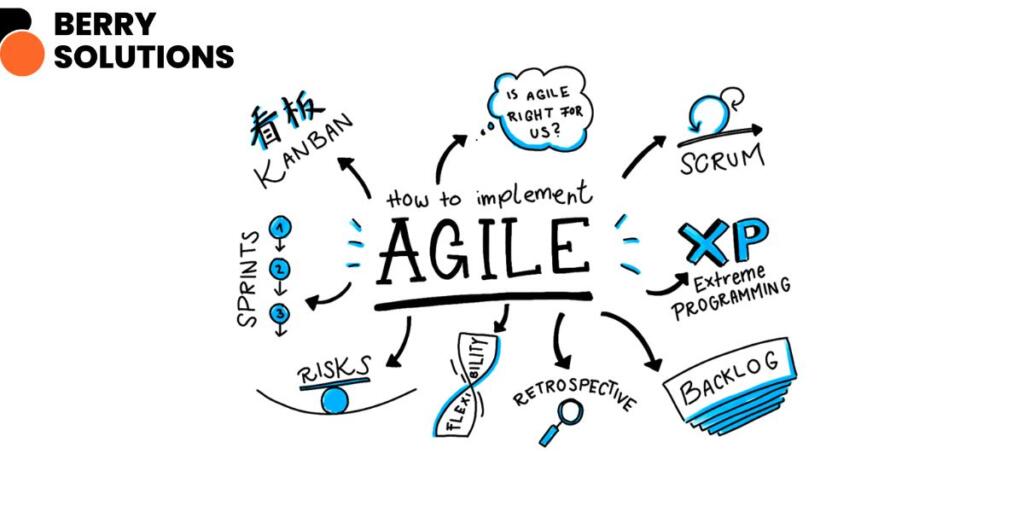
Scrum in Agile software development is the most popular. It uses roles like Product Owner, Scrum Master, and Development Team. Work is divided into Agile sprint cycle that usually last two weeks.
The Kanban Agile framework is another method. It uses boards and cards to show work progress. Test-driven development in Agile, pair programming in Agile teams, and Lean practices are also common. These Agile frameworks give teams choices depending on their needs.
Advantages of Agile Software Development
The benefits of Agile software development are clear. Faster delivery, stronger customer collaboration, and more adaptability make it ideal. Teams can release small updates regularly, reducing risks.
Here is a quick comparison:
| Agile Advantages | Agile Disadvantages |
| Incremental delivery | May cause scope creep |
| Flexibility in software development | Needs skilled teams |
| Agile project management improves teamwork | Can be hard to scale |
| Continuous improvement | Risk of burnout in long projects |
Challenges and Disadvantages of Agile
The challenges of Agile methodology include unclear goals, scope creep, and too many changes. Teams sometimes find it hard to balance flexibility with deadlines. Large organizations also struggle with scaling Agile across many departments.
Other Agile development challenges involve lack of documentation and team burnout. However, following Agile best practices such as proper planning, communication, and the use of tools like Jira can reduce these issues. If you are facing similar challenges and want expert guidance, feel free to contact us for tailored support.
Agile vs. Traditional Software Development Approaches
The debate of Agile vs traditional development shows why Agile is so popular. The Agile vs Waterfall model comparison highlights adaptability, speed, and customer involvement.
In traditional methods, planning is done once, and changes are difficult. In Agile, planning happens at every Agile iteration, making it easier to adapt. This is why advantages of Agile over Waterfall model are clear for businesses in the USA.
Best Practices in Agile Development
The best practices of Agile in software engineering include daily stand-ups, sprint reviews, and retrospectives. Continuous integration in Agile projects and test-driven development in Agile are also key practices. These keep code clean and reduce errors.
Agile teams also use Agile customer collaboration techniques and Agile team collaboration tools such as Jira, Trello, and GitHub. These tools support Agile project management and improve teamwork across remote and local cross-functional teams.
Real-World Examples of Agile in Action
One example of Agile in real-world projects comes from Spotify, which uses Agile squads and tribes. This structure allows self-organizing teams to innovate quickly. Another Agile project success story is Microsoft’s use of Agile frameworks to manage Windows updates. For more insights into how businesses adapt modern models for growth, you can also explore our White Label solutions.
There are also Agile examples in real-world startups in the USA. Many small businesses apply the Agile philosophy to grow fast. These cases show how Agile design process, Agile best practices, and Agile sprint cycles lead to success.
Conclusion
Agile has become the heart of modern software engineering. With Agile methodology, companies can deliver faster, adapt to changes, and improve customer satisfaction. The Agile values and principles continue to guide software teams in the USA and beyond.
In a world where change is constant, the Agile mindset helps businesses survive and grow. Whether you are a startup or a global tech company, embracing Agile project management and following Agile best practices can make your software projects more successful.
FAQs:
1: What is Agile in software development?
Agile in software development is a way of building software step by step using iterations and feedback, focusing on flexibility and customer needs.
2: What are the 4 principles of Agile?
The 4 core values are: individuals and interactions, working software, customer collaboration, and responding to change.
3: What is Agile vs Waterfall?
Agile is iterative and flexible, while the Waterfall model is linear and rigid with fixed steps.
4: Is Agile easy to learn?
Yes, Agile is easy to understand, but real practice requires teamwork and experience.
5: Is DevOps part of Agile?
DevOps is not part of Agile but it works well with it to speed up delivery.
6: Does Agile require coding?
Agile itself doesn’t require coding, but developers use coding within Agile projects.
7: Can I learn Agile on my own?
Yes, you can learn Agile by reading guides, taking online courses, and practicing with projects.