
What is Cybersecurity? This question matters more than ever in today’s online world. From shopping and banking to healthcare and education, almost everything depends on digital systems. This reliance brings both convenience and risk.
Cybersecurity definition is the practice of protecting networks, devices, and data from unauthorized access or damage. Without it, people and companies face dangerous cybersecurity threats such as phishing attacks, data breaches, and other cybersecurity attacks that cause serious harm. In the United States, the importance of cybersecurity has grown rapidly as cybercriminals use advanced tools. Learning the basics is the first step toward staying safe online.
What is Cybersecurity in Simple Words?
Cybersecurity is like locking the doors and windows of your home, but for your digital world. It protects computers, networks, and online accounts from malware (malicious software), identity theft, and hacking attempts. This is why cybersecurity awareness is so important in daily life.
Many people confuse information security vs cybersecurity, but they are slightly different. Information security focuses on keeping all types of information safe, whether digital or physical. Cybersecurity mainly protects electronic systems, ensuring the confidentiality, integrity, and availability (CIA triad) of data.
Why is Cybersecurity Important Today?
The importance of cybersecurity is clear when we look at how often cybercrime happens in the USA. From stolen credit card numbers to exposed medical records, these events can ruin businesses and destroy trust. Cybersecurity best practices are now critical for survival in a digital economy.
According to the Gartner cybersecurity spending forecast, worldwide spending on security is expected to hit $210 billion in 2024 and grow to $314 billion by 2028. This rise shows how much companies value safety. In fact, a Federal Trade Commission (FTC) data breach in 2017 exposed personal details of 147 million people, proving the real-world impact.
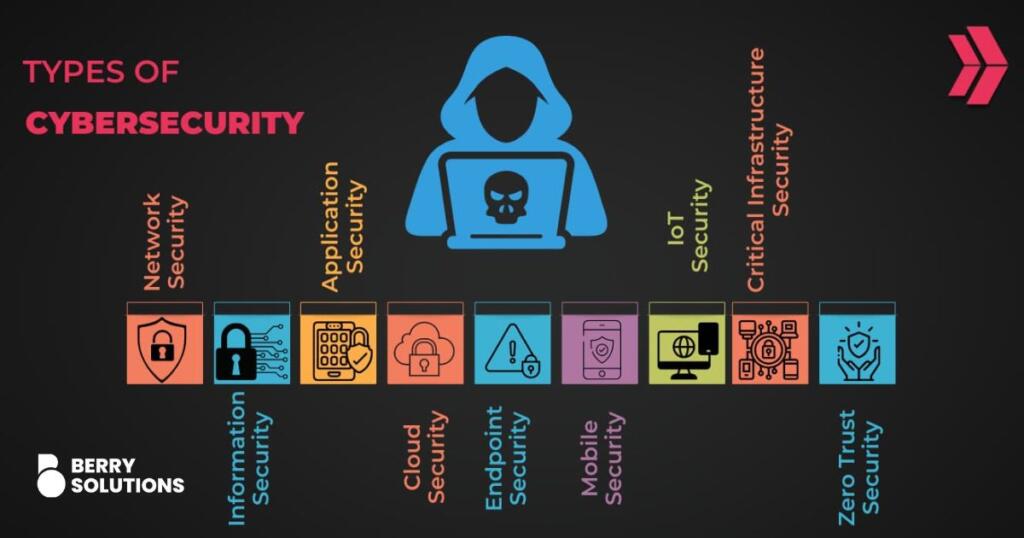
The Most Common Types of Cybersecurity
Several types of cybersecurity protect different areas of technology. Network security guards against unauthorized access and endpoint security shields personal devices like laptops or phones. Cloud security protects information stored online while Internet of Things (IoT) security defends connected smart devices.
Critical industries also rely on critical infrastructure security. For example, hospitals, energy providers, and transport systems must protect against outsider threats and insider threats alike. Without these defenses, public safety could be at serious risk.
Major Cybersecurity Threats You Should Know
Cybercrime takes many forms, and it is important to understand them. One of the most common is phishing attacks, where hackers trick people into clicking fake links or sharing passwords. Another is ransomware attacks, where criminals lock your data and demand money to release it.
There are also social engineering schemes, where attackers impersonate trusted people to steal information. Add to this insider threats, where employees misuse access, and outsider threats, where external hackers target systems. Together, these cybersecurity attacks cause billions in losses each year.

Cybersecurity Best Practices for Businesses and Individuals
The good news is that strong cybersecurity best practices can reduce risks. Using multi-factor authentication makes it harder for hackers to log in. Installing antivirus software and updating systems regularly helps prevent malware (malicious software). Encryption adds another layer by scrambling sensitive data. For complete protection, explore our IT Services to see how we protect businesses from cyber risks.
The idea of defense in depth means using many layers of protection. This may include firewalls, Intrusion Detection Systems (IDS), and Intrusion Prevention Systems (IPS). Following online safety practices like strong passwords and secure Wi-Fi keeps both individuals and businesses safe.
The Role of Cybersecurity Professionals
Cybersecurity professionals are the digital guardians of modern organizations. They monitor systems for unusual activity, respond to hacking attempts, and design better protections. From analysts to ethical hackers, their work ensures people and companies remain safe online.To see how experts can safeguard your business, explore our Cybersecurity Services.
In the USA, many cybersecurity careers exist across government, private firms, and even the military. A cybersecurity unit in the Air Force may defend national security, while corporate teams protect customer data. These roles are vital to reducing cybersecurity threats.
Career Opportunities and Salary in Cybersecurity
The demand for experts in this field is rising quickly. According to Bureau of Labor Statistics (BLS) cybersecurity data, jobs in information security are expected to grow 32% by 2032, far faster than average. This cybersecurity job growth highlights the growing urgency of the need.
When it comes to pay, cybersecurity salary potential is also high. Entry-level analysts often start near $90,000, while managers or specialists may earn $150,000 or more. For many, a cybersecurity degree opens doors to stable and rewarding careers.
| Job Title | Average USA Salary | Growth Outlook |
| Security Analyst | $92,000 | 32% Growth |
| Cybersecurity Manager | $140,000 | High Demand |
| Ethical Hacker | $120,000 | Strong Demand |
Future Trends in Cybersecurity and Emerging Technologies
Looking ahead, cybersecurity trends will shape how we defend against new risks. Artificial intelligence and machine learning are already being used to detect unusual patterns and prevent hacking attempts before they succeed.
There is also concern about quantum computing, which may break traditional encryption methods. Governments and companies are adopting data protection laws and regulations to keep pace with threats. The future of cybersecurity will require constant innovation and global cooperation.
How to Start a Career in Cybersecurity
If you want to join this fast-growing field, begin with cybersecurity training and cybersecurity certifications. Popular options include CompTIA Security+, CEH, and CISSP. These build the skills needed for cybersecurity and give you credibility with employers.
You do not always need a cybersecurity degree program to enter the field, but it helps. Many start with self-study, online safety practices, and internships. Building a home lab or joining community projects can also show your passion and skill.
Related Cybersecurity Resources
To deepen your knowledge, visit official cybersecurity awareness resources like CISA.gov, IBM Security, or CISCO. Reading reports from Skyhigh Security also helps you stay updated on threats.
Books, blogs, and community forums provide extra learning beyond the classroom. With so many free resources, there is no excuse for ignoring cybersecurity awareness in today’s digital world.
FAQs:
What exactly does cybersecurity do?
Cybersecurity protects computers, networks, and data from digital threats. It stops hacking attempts, malware, and identity theft by using tools like firewalls, encryption, and multi-factor authentication.
What are the five types of cybersecurity?
The five main types are network security, cloud security, endpoint security, application security, and critical infrastructure security. Each type defends a different part of the digital world.
Is cybersecurity a high-salaried field?
Yes. According to the Bureau of Labor Statistics (BLS) cybersecurity data, cybersecurity jobs pay well. Entry roles start near $70,000, while experts can earn over $150,000 yearly.
How can I become a cyber security?
You can start by earning a cybersecurity degree or completing cybersecurity certifications. Building skills in coding, networking, and fraud reporting also helps. Many professionals begin with IT training before moving into security.
What is the best cybersecurity company?
Global leaders include IBM Security, Cisco, Palo Alto Networks, and Check Point. These companies provide tools to stop phishing attacks, ransomware attacks, and social engineering risks.
Which is more difficult, AI or cyber security?
Both are challenging, but in different ways. AI requires deep math and programming knowledge. Cybersecurity demands constant learning because cybersecurity threats keep evolving. Many say AI is harder technically, but cybersecurity needs faster real-world decision-making.